
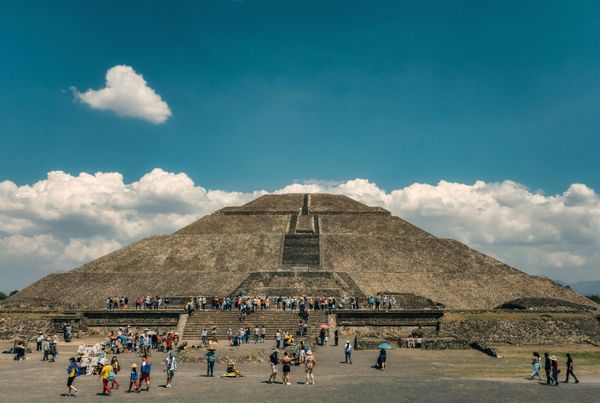
Nestled in the heart of Mexico’s ancient city of Teotihuacan, the majestic ‘Pyramid of the Moon’ stands as a testament to the ingenuity and astronomical prowess of its builders. Recent research has brought to light a fascinating aspect of this grand edifice: Teotihuacan’s ‘Pyramid of the Moon’ is aligned with the solstice sun, researchers argue. This revelation adds a new layer of understanding to the already rich tapestry of Mesoamerican history and culture.
The Ancient City of Teotihuacan
Teotihuacan, often referred to as the “City of the Gods,” was a thriving metropolis long before the Aztecs arrived. At its peak, around 500 CE, it was one of the largest cities in the world, with an estimated population of over 100,000 inhabitants. The city’s architectural marvels, such as the ‘Pyramid of the Moon’, the ‘Pyramid of the Sun’, and the ‘Avenue of the Dead’, have captivated historians, archaeologists, and tourists alike for centuries.
The ‘Pyramid of the Moon’
The ‘Pyramid of the Moon’ is the second-largest structure in Teotihuacan, after the ‘Pyramid of the Sun’. It is situated at the northern end of the ‘Avenue of the Dead’ and serves as the focal point of the city. This pyramid is believed to have been constructed in several stages, with the earliest phases dating back to around 100 CE. The structure’s final form is thought to symbolize the sacred mountain Cerro Gordo, located nearby.
Astronomical Alignment
The alignment of ancient structures with celestial events is a common feature in many cultures around the world. The discovery that Teotihuacan’s ‘Pyramid of the Moon’ is aligned with the solstice sun, researchers argue, is a significant addition to this body of knowledge. The solstices, which occur twice a year, mark the points when the sun reaches its highest or lowest point in the sky at noon, resulting in the longest and shortest days of the year.
Methodology of the Study
The team of researchers employed advanced surveying techniques and computer simulations to analyze the orientation of the ‘Pyramid of the Moon’. They discovered that the pyramid’s main axis is precisely aligned with the setting sun during the summer solstice. This alignment would have had profound significance for the inhabitants of Teotihuacan, influencing their agricultural practices, religious ceremonies, and social organization.
Cultural and Religious Significance
The alignment of the ‘Pyramid of the Moon’ with the solstice sun suggests that the people of Teotihuacan had a sophisticated understanding of astronomy. This knowledge would have been crucial for determining the timing of agricultural activities, such as planting and harvesting. Additionally, it underscores the importance of the sun in their religious and cosmological beliefs.
The Role of the Sun in Mesoamerican Cultures
In many Mesoamerican cultures, the sun was revered as a powerful deity. Its movements were closely monitored and integrated into various aspects of daily life and spiritual practices. The precise alignment of the ‘Pyramid of the Moon’ with the solstice sun indicates that the builders of Teotihuacan placed great importance on this celestial event, possibly viewing it as a time of renewal and rebirth.
Implications for Understanding Teotihuacan
The revelation that Teotihuacan’s ‘Pyramid of the Moon’ is aligned with the solstice sun, researchers argue, has significant implications for our understanding of this ancient city. It provides insight into the advanced level of astronomical knowledge possessed by the Teotihuacanos and highlights the interconnectedness of their architectural, agricultural, and religious practices.
Architectural Genius
The alignment of the ‘Pyramid of the Moon’ with the solstice sun is a testament to the architectural genius of its builders. Constructing such a massive structure with precise astronomical alignment would have required careful planning, sophisticated surveying techniques, and a deep understanding of the natural world. This discovery adds to the growing body of evidence that ancient civilizations were far more advanced than previously thought.
Agricultural Calendar
The solstice alignments likely played a crucial role in the agricultural calendar of Teotihuacan. By observing the position of the sun at specific times of the year, the inhabitants could determine the optimal times for planting and harvesting crops. This would have been essential for ensuring food security and supporting the city’s large population.
Religious Ceremonies
The solstices were probably significant events in the religious calendar of Teotihuacan. The alignment of the ‘Pyramid of the Moon’ with the solstice sun suggests that the city’s inhabitants may have conducted elaborate ceremonies to honor the sun and seek its favor. These ceremonies could have included offerings, sacrifices, and other rituals designed to ensure the continued prosperity and well-being of the community.
Conclusion
The discovery that Teotihuacan’s ‘Pyramid of the Moon’ is aligned with the solstice sun, researchers argue, is a remarkable achievement that sheds new light on the astronomical knowledge and cultural practices of this ancient civilization. It underscores the importance of the sun in the lives of the Teotihuacanos and highlights the interconnectedness of their architectural, agricultural, and religious activities.
As we continue to explore and uncover the mysteries of Teotihuacan, each new discovery brings us closer to understanding the ingenuity and sophistication of its people. The alignment of the ‘Pyramid of the Moon’ with the solstice sun is a testament to their advanced knowledge and their ability to harness the power of the natural world to enhance their lives and honor their deities.
In the grand tapestry of human history, Teotihuacan stands as a shining example of our ancestors’ ability to observe, understand, and integrate the cosmos into the very fabric of their existence. This discovery not only enriches our understanding of Teotihuacan but also inspires us to continue exploring the wonders of our ancient past.
About the Author


